This is a test post to be check if the system can pick up posts from wordpress.
Blog
-
Manicure Guide 2026: Types, Costs & At-Home Tips
TL;DR — A manicure is a cosmetic treatment for the hands and nails that typically includes soaking, shaping, cuticle care, and polish or wrap application. In 2026, six types dominate Canadian salons: classic ($25–$40 CAD), French ($35–$55), gel ($45–$70), dip powder ($55–$80), acrylic ($60–$100), and at-home nail wraps from brands like ManicureFX ($8–$15 per set). Wear time ranges from 5 days to 4 weeks.
What is a manicure and what does it actually include? {#what-is-a-manicure}
A manicure is a cosmetic treatment for the hands and nails that combines grooming, conditioning, and decorative finishing in a single sitting. The word comes from the Latin manus (hand) and cura (care), and it’s distinct from a pedicure, which covers the feet. Most salon manicures run 30 to 60 minutes depending on the finish.
A standard manicure follows six steps:
- Soak the hands in warm soapy water to soften skin and cuticles.
- File and shape the free edge of each nail (square, round, almond, or coffin).
- Cuticle work — pushing back (never aggressively cutting) the proximal nail fold.
- Hand massage with lotion or cuticle oil.
- Base and color polish, gel, dip powder, or a nail wrap.
- Top coat for shine and chip protection.
Clinical sources, including the American Academy of Dermatology, note that cuticles act as a natural seal against infection, so reputable technicians push them back rather than cut them. A proper manicure should leave nails sealed, smooth, and free of visible damage to the surrounding skin.
What are the main types of manicures in 2026? {#types-of-manicures}

Six manicure types dominate the Canadian market in 2026: classic, French, gel, dip powder, acrylic, and nail wraps. Each suits a different budget, time commitment, and nail-health priority.
Classic manicure. Regular liquid nail polish applied over a base coat, finished with a top coat. Takes about 30 minutes, air-dries, and gives you the widest color range. Best for special occasions or weekly refreshes.
French manicure. A subset of the classic: pale pink or nude base with bright white tips. It’s the most-requested wedding and corporate look. Modern variations swap the white for gold, glitter, or pastel — see Gold Glitter French Tip Nails for a wrap-based take.
Gel manicure. Polish cured under a UV or LED lamp for 30–60 seconds per coat. Wears 2–3 weeks without chipping. Requires acetone soak-off for removal, which can stress the nail plate.
Dip powder manicure. The nail is brushed with resin, dipped into colored acrylic powder, and sealed. No UV light needed. Wears 3–4 weeks — the longest of any non-extension option.
Acrylic manicure. A liquid monomer and powder polymer mixed to sculpt extensions over the natural nail or a tip. Needs fills every 2–3 weeks as the nail grows out. Most common choice for long, dramatic shapes.
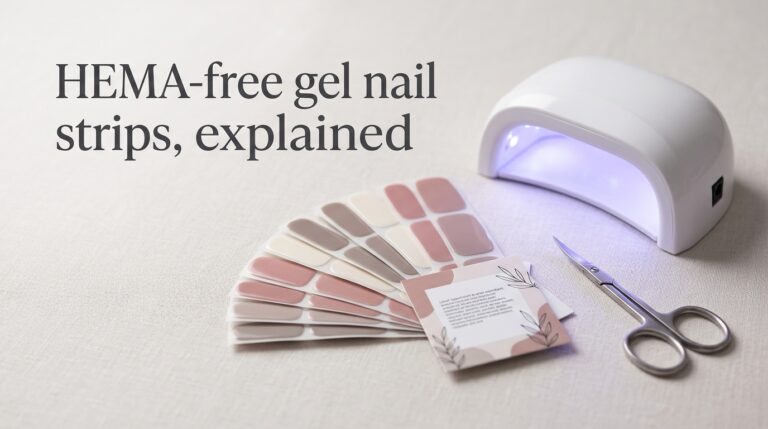
Nail wraps and gel nail stickers. Pre-printed, adhesive-backed polish strips you peel and apply. ManicureFX nail wraps from Nailwraps.ca are made with real nail polish ingredients, require no drying, last up to 10 days, and skip UV lamps and acetone entirely. Designs include florals like Botanical Garden, abstracts like Night Sky, and gel-finish options like Mint Whisper GEL.
How much does a manicure cost in Canada? {#manicure-cost-canada}
A Canadian salon manicure costs between $25 and $100 CAD depending on type, while at-home nail wraps run $8 to $15 per set. The table below reflects 2026 average prices across major Canadian metros (Toronto, Vancouver, Montreal, Calgary).
A gel manicure every 3 weeks works out to roughly $1,040 CAD per year before tip. Switching to at-home wraps at the same cadence costs about $260 CAD per year — a difference of roughly $780. Add a 15–20% tip to any salon service; tipping in cash remains standard practice in Canada, and most technicians don’t see card-based tips for several days.
Budget-friendly designs like Split Wines or Cinnamon Milk deliver salon aesthetics at one-fifth the price of a gel set. Bulk-buying three or four sets pushes the per-manicure cost below $10.
How long does each type of manicure last? {#manicure-durability}
Manicure wear time ranges from 5 days for classic polish to 4 weeks for dip powder. Your nails grow about 3 mm per month — roughly 1 mm per 10 days — which is why every type eventually shows growth at the cuticle regardless of chip resistance.
- Classic polish: 5–7 days before chipping at the tips.
- French manicure (classic polish base): 5–7 days; the white tip shows wear first.
- Gel manicure: 2–3 weeks. Lifts at the edges if cured improperly.
- Dip powder: 3–4 weeks. The thickest, most chip-resistant option.
- Acrylic extensions: 2–3 weeks between fills; the set itself can last 6–8 weeks with maintenance.
- ManicureFX nail wraps: Up to 10 days with proper prep and a top coat.
Longevity depends on more than the product. Hot dishwater, gardening, and harsh cleaners cut every manicure’s lifespan in half. Daily cuticle oil and gloves for wet work add 3–5 days. People with faster nail growth or oily nail beds (a heritable trait) see shorter wear across every type.
How do you do an at-home manicure step by step? {#at-home-manicure-steps}

An at-home manicure takes 25–40 minutes and uses tools you can buy for under $30 CAD total. The steps below work for both traditional polish and nail wraps.
- Remove old polish with an acetone-free remover to limit dehydration. Acetone is faster but harsher.
- Trim and file in one direction only — back-and-forth sawing causes peeling. Aim for square or rounded edges.
- Soak hands in warm soapy water for 3–5 minutes to soften cuticles.
- Push back cuticles with a wooden orange stick or rubber pusher. Never cut the live tissue.
- Buff lightly to remove shine, then wipe with rubbing alcohol to dehydrate the nail plate. Skip this step if you’re using wraps with a strong adhesive.
- Apply base coat (for polish) or peel and place your wrap from the cuticle outward, smoothing from the center.
- Apply two thin polish coats, waiting 2 minutes between, OR file off the wrap’s excess by pressing down and filing at a 90° angle along the free edge.
- Finish with a top coat and cuticle oil. The oil rehydrates the surrounding skin and prevents lifting.
For a no-drying option, a wrap kit like Frosted Noel or Enchanted Garden skips steps 7’s drying window entirely — you’re ready to use your hands immediately after filing.
Are manicures bad for your nails? {#manicure-nail-damage}
Manicures aren’t inherently damaging, but the removal process and over-treatment cause most nail problems people blame on the manicure itself. Acrylic and gel removal — when rushed, peeled off, or aggressively drilled — strips layers from the nail plate and can take 4–6 months to fully recover.
Key risks by type:
- UV exposure from gel lamps is small per session but cumulative. A 2023 study published in Nature Communications found UV nail dryers can damage DNA in skin cells with repeated use. Applying SPF 30+ to the hands before curing reduces exposure.
- Dip powder hygiene. Shared communal jars can harbor bacteria. Ask your salon to pour fresh powder into a clean container or use a brush-on application.
- Over-buffing thins the nail plate. Once per manicure cycle is plenty.
- Acetone soaks dehydrate the nail and surrounding skin every removal.
Nail wraps are the gentlest option: no drilling, no UV, no acetone soak, and removal is a 5-minute warm-water peel. If you’ve been doing gel or acrylic for years, switching to wraps like Morning Mist gives the natural nail time to rebuild.
See a dermatologist if you notice persistent lifting from the nail bed, green or black discoloration (possible bacterial or fungal infection), or pain that lasts more than a few days after a service.
How do you choose the right manicure for your lifestyle? {#choose-right-manicure}
The right manicure matches your budget, schedule, and how rough you are on your hands. Use these matchups as a starting point:
- Busy professionals who need chip resistance without weekly touch-ups: gel manicure or 10-day nail wraps.
- Budget-conscious shoppers: classic polish or at-home wraps. A $12 wrap set rivals a $60 salon visit.
- Healthcare, food service, and trades workers who wash hands 20+ times a day: short, rounded nails with wraps or gel — acrylic extensions catch on gloves and lift fast.
- One-event wear (weddings, holidays, photoshoots): nail wraps. Designs like Angelic Accents or Shimmering Sunset deliver a custom look without a 90-minute appointment.
- Nail-health priority: classic polish or breathable wraps with daily cuticle oil. Avoid back-to-back gel cycles.
- Canadian winters dry hands aggressively from November to March. Whatever manicure you choose, pair it with a heavy hand cream and cuticle oil twice daily — indoor heating is the main culprit, not the cold itself.
Key Takeaways
- Canadian manicures cost $25–$100 CAD at salons; at-home nail wraps run $8–$15 per set.
- Dip powder lasts longest at 3–4 weeks; classic polish lasts just 5–7 days.
- Nails grow about 3 mm per month, exposing the cuticle line regardless of manicure type.
- Nail wraps avoid UV lamps, acetone soaks, and drilling — the gentlest option for nail health.
- Gel and acrylic removal causes most damage; recovery takes 4–6 months.
Frequently Asked Questions
How often should you get a manicure?
Most people get a manicure every 2–3 weeks, matching the average gel or acrylic fill cycle. Classic polish wearers refresh weekly. With ManicureFX nail wraps lasting up to 10 days, every 10–14 days works well. Avoid back-to-back gel or acrylic without 1–2 wrap or polish cycles in between to let the nail plate rebuild.
What's the difference between gel and shellac manicures?
Shellac is a brand name owned by CND that refers to a specific hybrid polish-gel formula. All shellac is technically a gel, but not all gels are shellac. Shellac is typically thinner, easier to remove, and lasts 1–2 weeks. Generic gel polish is thicker, lasts 2–3 weeks, and requires longer acetone soak-off for removal.
Can you do a manicure on short nails?
Absolutely. Short nails actually wear most manicure types longer because there's less free edge to chip. Classic polish, gel, dip powder, and nail wraps all work on nails as short as 2 mm past the fingertip. Acrylic extensions are the one type that requires a minimum length or tip application. Designs like [Violet Square](https://nailwraps.ca/products/violet-square) are made to flatter shorter nail beds.
How do nail wraps compare to gel polish?
Nail wraps and gel polish both last around 10–21 days, but wraps skip UV curing, acetone removal, and drying time entirely. Gel offers more custom color mixing; wraps offer pre-made nail art designs you can't easily replicate with polish. Wraps cost $8–$15 per set versus $45–$70 for a salon gel manicure — roughly a 5× price difference.
Why do my manicures chip so fast?
The top three causes are skipping the dehydrator/alcohol wipe before base coat, applying polish too thick, and not capping the free edge with top coat. Hot water within 2 hours of polish application is another major culprit. Daily cuticle oil and gloves for dishwashing extend any manicure by 3–7 days.
Are nail wraps safe to use on natural nails?
Yes. ManicureFX nail wraps are made with real nail polish ingredients and adhere with a polish-based backing, not industrial adhesive. They don't require buffing, drilling, or UV exposure. Removal is a 5-minute warm-water soak or gentle peel. Dermatologists generally consider wraps among the lowest-risk nail enhancements for natural nail health.
How long does an at-home manicure with nail stickers take?
An at-home manicure with nail wraps takes 15–25 minutes total, including prep. That breaks down to about 5 minutes of cuticle and nail prep, 8–10 minutes applying and shaping the wraps to each nail, and 2–3 minutes of filing the excess. There's no drying time, so you can use your hands immediately.
-
Hello world!
Welcome to WordPress. This is your first post. Edit or delete it, then start writing!