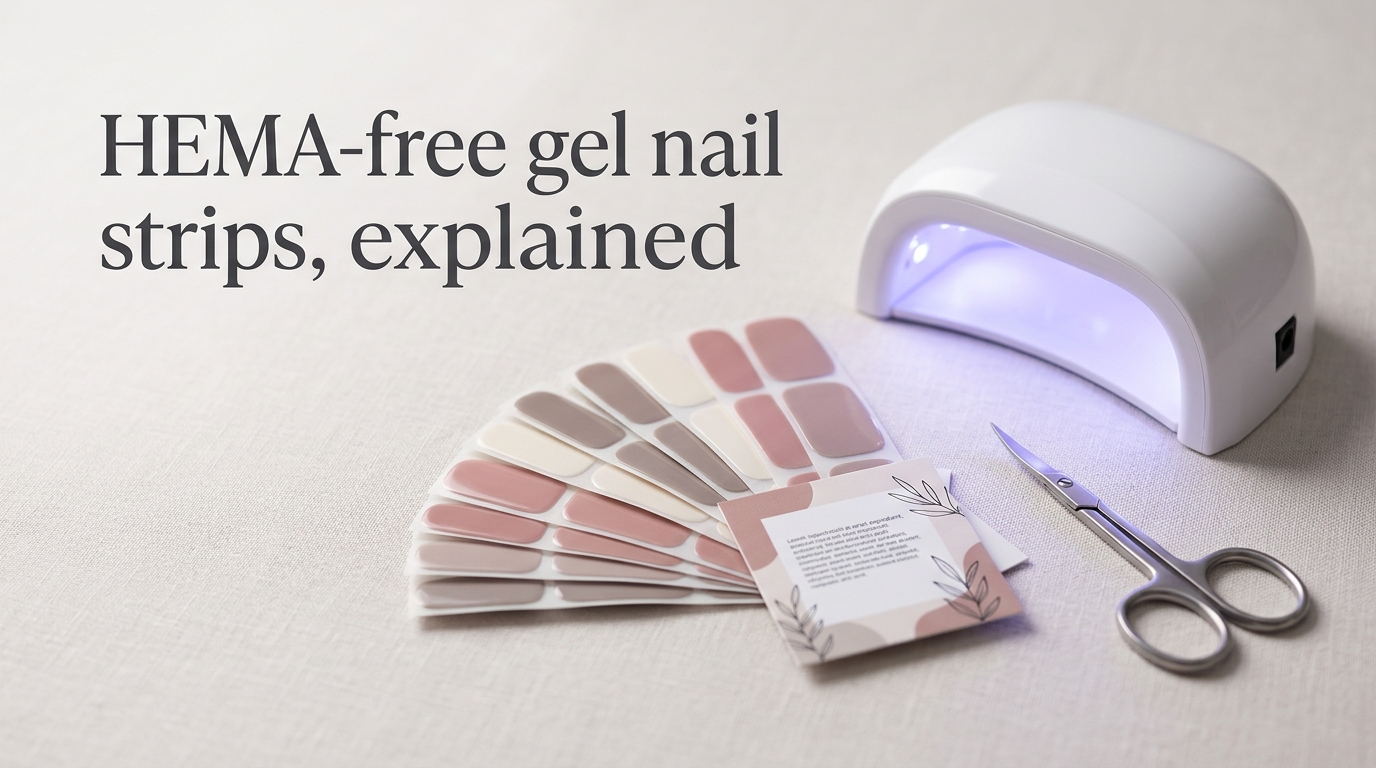
HEMA-free gel nail strips, explained
TL;DR — HEMA-free gel nail strips are semi-cured gel manicure strips made without 2-hydroxyethyl methacrylate, the acrylate monomer most often blamed for nail-product allergies. They matter most to people with sensitive skin, frequent gel users, and anyone with a known acrylate allergy. HEMA-free reduces one common sensitizer, but it does not make a product allergen-free or safe to apply carelessly.
What are HEMA-free gel nail strips?
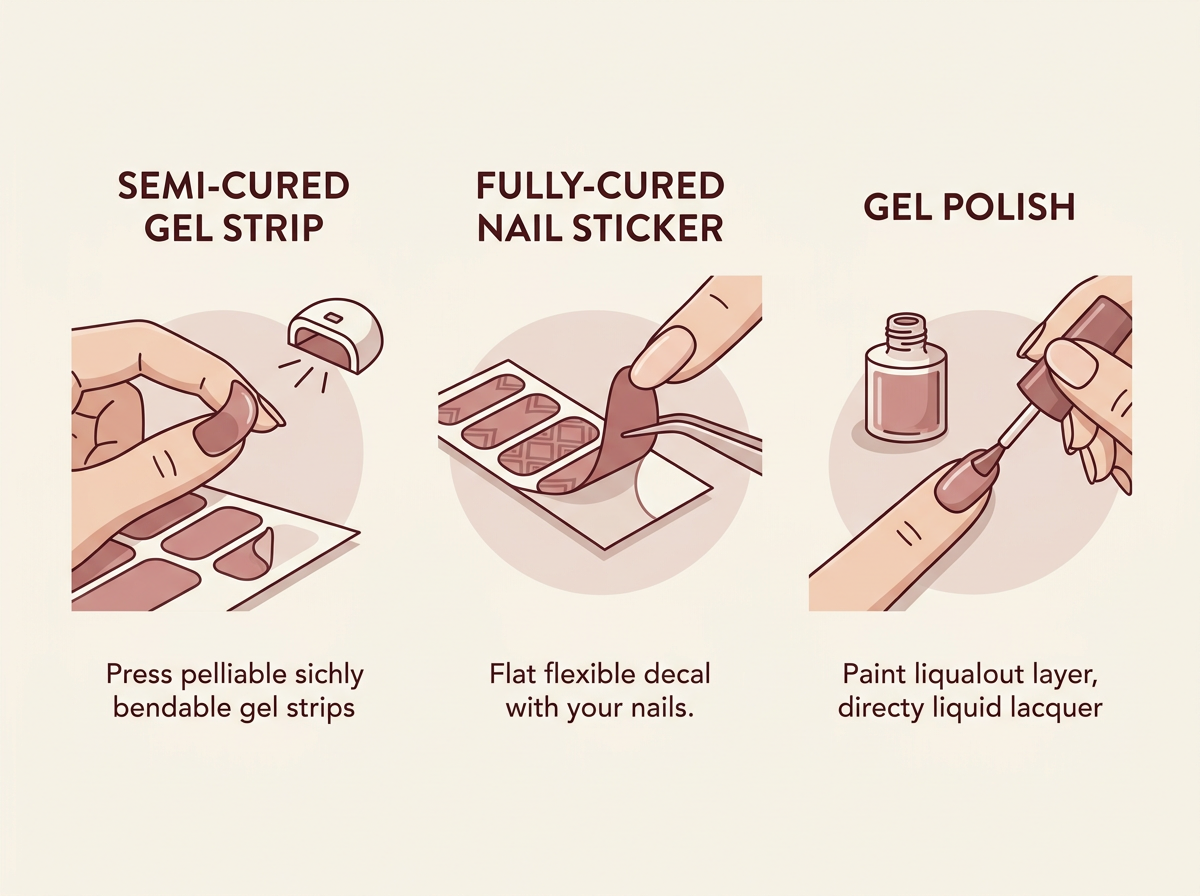
HEMA-free gel nail strips are semi-cured gel manicure strips whose gel formula contains no 2-hydroxyethyl methacrylate (HEMA), a small acrylate monomer commonly used in nail products. The strips work like any other semi-cured gel: you press a pliable, partly-hardened gel strip onto the nail, then finish curing it under a UV or LED lamp until it sets solid.
The "semi-cured" part is what separates these from two other product types people confuse them with. A semi-cured strip is roughly 60% cured at the factory, so it stays bendable enough to shape around your nail but needs a lamp to finish. That's different from a fully-cured nail sticker, which is just a flexible decal with adhesive backing and never sees a lamp. It's also different from traditional gel polish, which you paint on in liquid layers and cure coat by coat.
Because semi-cured strips still go through a curing step at home, the gel chemistry matters. The formula has to bond to your nail and stay flexible without cracking. That's exactly the job HEMA usually does. So when a brand removes HEMA, it has to replace that function with other ingredients — which is where the meaningful differences between products start. For more on how semi-cured strips compare to other formats, see our guide to at-home gel strips and nail care.
The short version: "HEMA-free" is an ingredient claim about the gel itself, not a claim about the product being a sticker, being adhesive-only, or skipping the lamp. A HEMA-free strip is still a real semi-cured gel that you cure at home — it just leaves out one specific monomer.
What is HEMA and why is it in gel nail products?
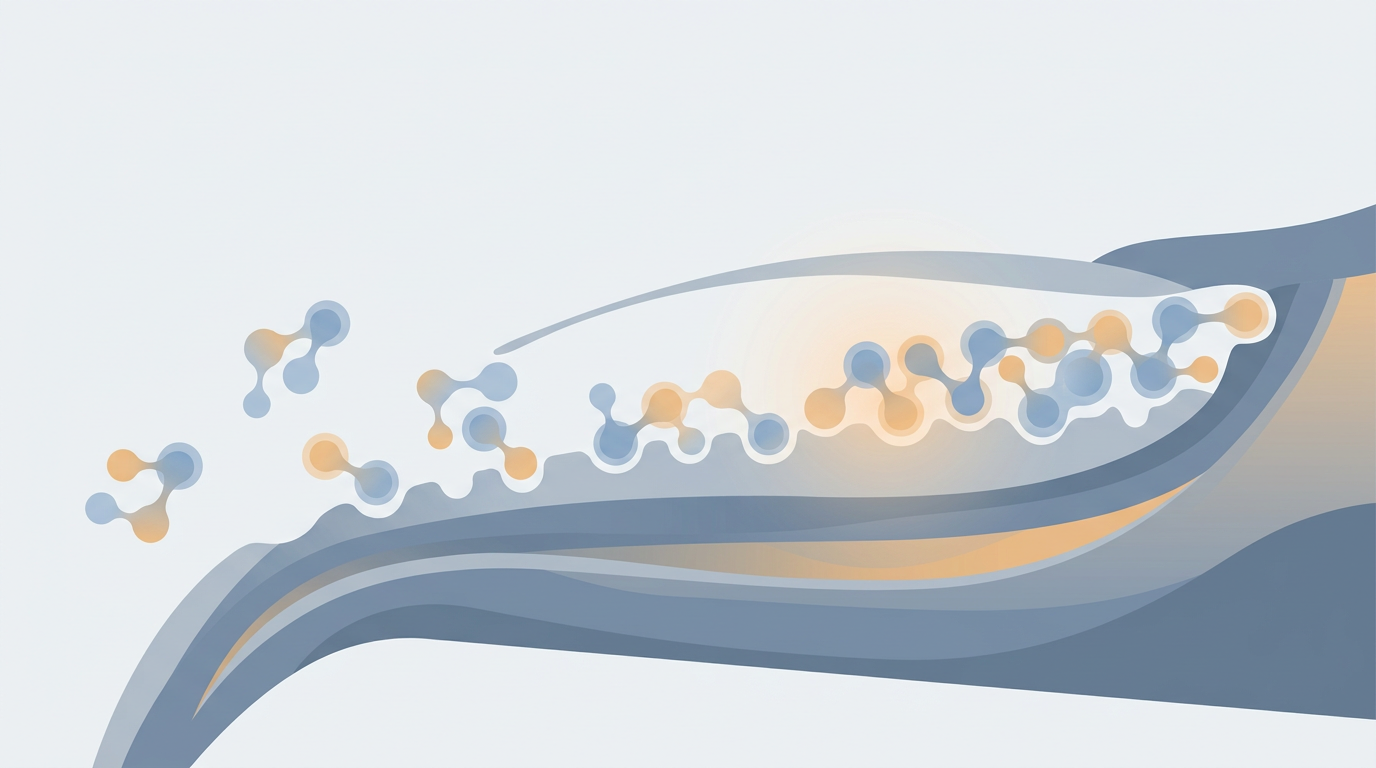
HEMA is a low-molecular-weight acrylate monomer used in gel formulas to improve how well the gel sticks to the nail and how flexible it stays after curing. Its full chemical name is 2-hydroxyethyl methacrylate, and because the molecule is small and reactive, it slips into the microscopic surface of the nail plate and locks in during curing. That's why it shows up almost everywhere in the gel world.
You'll find HEMA in standard gel polishes, builder gels, hard gels, and a large share of gel nail strips. Formulators like it because it does several jobs cheaply: it boosts adhesion so the product doesn't lift, it keeps the cured film from becoming brittle, and it helps thinner the overall mix so the gel spreads and cures evenly. For decades it was the default adhesion promoter in the category.
The trade-off is regulatory and safety attention. In the European Union, products containing HEMA and the related monomer di-HEMA trimethylhexyl dicarbamate must be labeled "for professional use only" — a rule that took effect across the EU in 2021 following guidance from the European Chemicals Agency on skin sensitization. That label doesn't mean the ingredient is banned; it means regulators decided untrained consumers shouldn't be the primary users of high-HEMA professional products applied as liquids.
That distinction matters for strips. A semi-cured strip already has most of its HEMA reacted into solid polymer at the factory, so the exposure profile differs from a pot of liquid builder gel. Still, the same monomer is in play, and understanding why it's there explains why removing it changes the product. If you care about what's genuinely kind to your natural nails, our nail health and safety section tracks these ingredient questions.
Is HEMA bad for your nails or skin?
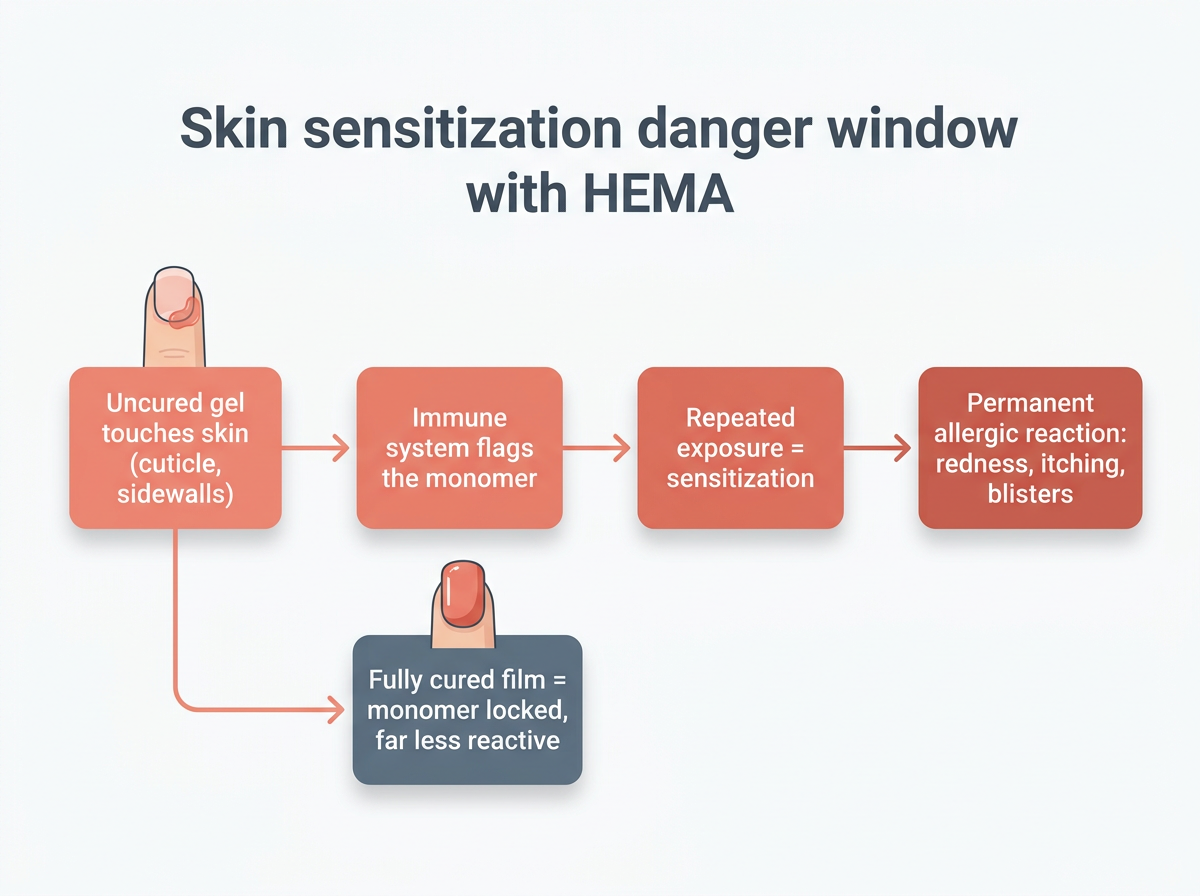
The real concern with HEMA isn't nail damage — it's allergic contact dermatitis caused by skin sensitization to acrylates. HEMA is a well-documented skin sensitizer, meaning repeated skin contact with the uncured monomer can train your immune system to react to it. Once that happens, the reaction tends to be permanent.
Here's the mechanism in plain terms. While gel is liquid or semi-cured, the HEMA monomer is still chemically "available" and can penetrate skin. If uncured gel touches the skin around your nail — the cuticle, sidewalls, or fingertip — your immune system can flag the monomer as a threat. After enough exposure, you become sensitized. From then on, even small contact can trigger redness, itching, swelling, tiny blisters, or peeling skin, sometimes spreading beyond the hands. In some cases people develop reactions to dental acrylics and other acrylate products too, because the immune system cross-reacts.
The exposure route that causes most problems is poor application or incomplete curing. If gel is flooded onto the cuticle, if the lamp is too weak or too old, or if curing time is cut short, you end up with uncured monomer sitting against skin. That's the danger window. Properly cured gel — fully polymerized into a hard film — is far less reactive because the free monomer is locked up.
Acrylate allergy is common enough that the American Contact Dermatitis Society named acrylates its "Allergen of the Year" in 2012, partly because home and salon gel use was driving a rise in cases. You can read more about contact dermatitis on Wikipedia for general background. The takeaway: HEMA doesn't rot your nails. It carries a real, lasting allergy risk that's mostly tied to letting uncured gel touch skin — which is why technique matters as much as ingredients.
Are HEMA-free gel nail strips actually safer?
HEMA-free gel strips are meaningfully safer for many people because they remove one of the most common acrylate sensitizers — but "HEMA-free" is not the same as "allergen-free," and ManicureFX won't pretend it is. Removing HEMA takes the single most frequently reported nail-allergy trigger off the table. For someone already sensitized to HEMA, that can be the difference between using a product and breaking out.
The catch is that HEMA isn't the only acrylate in nail chemistry. Brands that drop HEMA usually swap in other monomers to do the adhesion and flexibility work, and several of those can also sensitize skin. Common substitutes include HPMA (hydroxypropyl methacrylate), various acrylate esters, and di-HEMA trimethylhexyl dicarbamate — which, despite the name, is a separate molecule from HEMA but is itself a known allergen and is covered by the same EU professional-use labeling. So a strip can be technically HEMA-free while still containing acrylates that could trigger a reaction in a sensitive person.
There's a second, bigger point. For the average user without an existing allergy, how you cure and apply the strip matters more than whether it contains HEMA. Fully curing the gel and keeping it off your skin reduces uncured-monomer exposure regardless of formula. A HEMA-containing strip that's applied cleanly and cured fully can expose your skin to less reactive monomer than a HEMA-free strip that's flooded onto the cuticle and under-cured.
Our independent stance: HEMA-free is a genuine, sensible step that reduces one major risk, and it's the smarter default if you have a choice and any sensitivity. It is not a safety guarantee, not a license to skip curing, and not a reason to ignore the rest of the ingredient list.
What's the difference between HEMA-free and HEMA-containing strips?
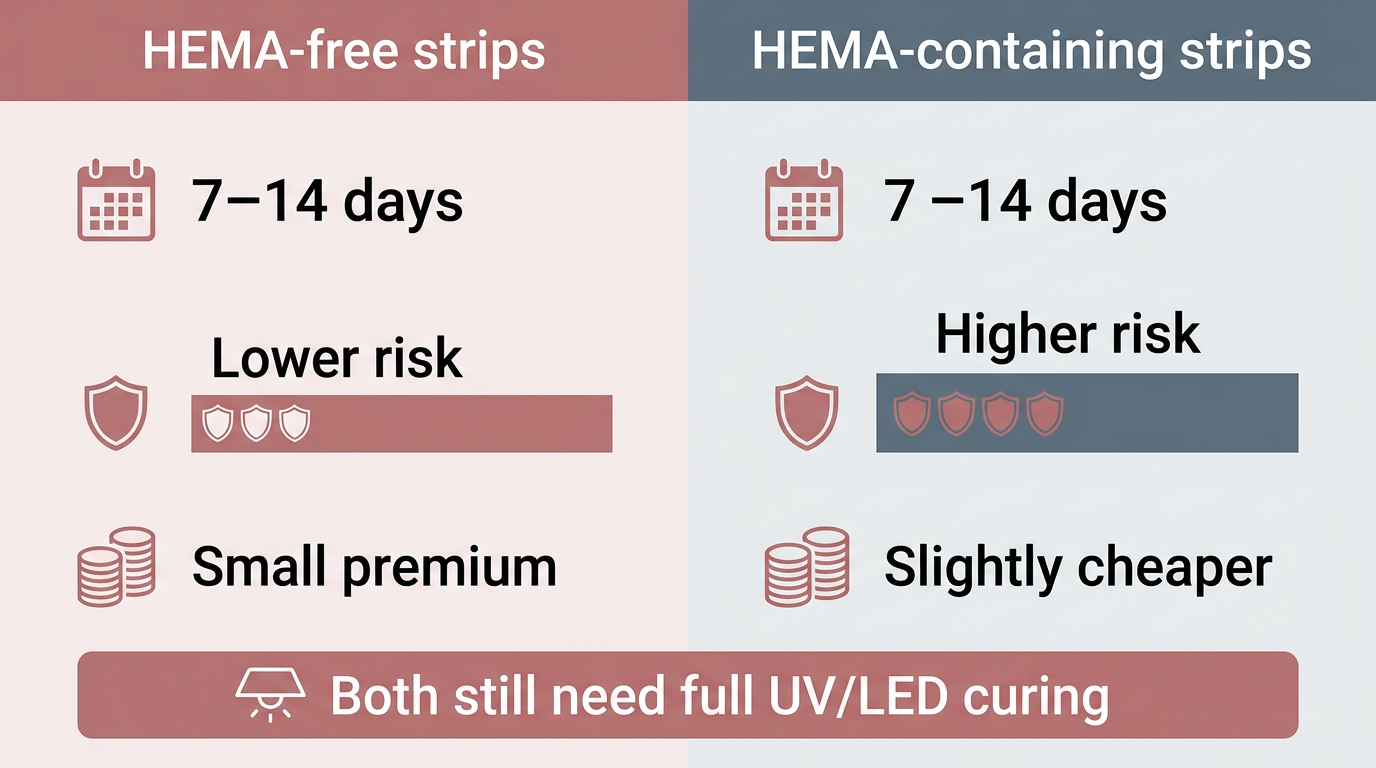
The core differences come down to allergy risk, adhesion, ingredient transparency, and price — and the gaps are smaller than marketing often implies. HEMA-containing strips historically have a slight edge in raw adhesion because HEMA is so good at its job, while HEMA-free strips trade a bit of that for a lower sensitization profile. In real-world wear testing, well-made strips in both camps can run a similar 7 to 14 days; formulation quality and your prep matter more than the HEMA line item alone.
The table below summarizes the practical trade-offs.
HEMA-free vs HEMA-containing gel nail strips: 2026 comparison Attribute HEMA-free strips HEMA-containing strips Adhesion / wear time Strong; typically 7–14 days with good prep Strong, sometimes marginally better grip out of the box Allergy / sensitization risk Lower — removes the most common acrylate trigger, but other acrylates may remain Higher — HEMA is a leading reported sensitizer Ingredient transparency Often marketed on the claim, so full INCI lists are easier to find Varies; some brands bury the full list Typical price Often a small premium Often slightly cheaper for comparable quality Curing requirement Still needs full UV/LED curing Still needs full UV/LED curing
Notice the last row: both types are semi-cured gels, so both require a lamp and a full cure. Skipping or shortening that step undermines the safety benefit of either option. If you're weighing brands, our brand comparisons test wear time and finish side by side rather than trusting the box copy.
How can you tell if a gel nail strip is truly HEMA-free?

The only reliable way to confirm a strip is HEMA-free is to read the full INCI ingredient list, not the front-of-pack claim. Marketing words like "sensitive," "gentle," "clean," or "skin-friendly" have no regulated meaning and don't guarantee anything about acrylates. The ingredient list does.
Scan the list for these specific names: HEMA, hydroxyethyl methacrylate, 2-hydroxyethyl methacrylate, and di-HEMA trimethylhexyl dicarbamate. The last one is a separate molecule from HEMA but is a known sensitizer and is what the EU professional-use label also targets, so an honest "HEMA-free" brand will usually disclose whether it's present or absent. If you see HPMA (hydroxypropyl methacrylate) or other methacrylates, the product still contains acrylates even if it's technically HEMA-free.
Treat vague reassurance as a red flag. A brand that says "formulated for sensitive nails" but won't publish a full ingredient list isn't giving you enough to verify anything. Legitimate HEMA-free products generally lean into transparency because the claim is their selling point.
If the list isn't on the packaging or product page, contact the brand directly and ask for the complete INCI list and confirmation that no HEMA or di-HEMA trimethylhexyl dicarbamate is present. Reputable companies answer this quickly. You can cross-check unfamiliar ingredient names against a database like the European Commission's CosIng cosmetic ingredient database to see what a given chemical actually is. When a brand stays silent or sends a marketing reply instead of an ingredient list, that's your answer — and we flag products like that in our nail health and safety coverage.
Who should choose HEMA-free gel nail strips?
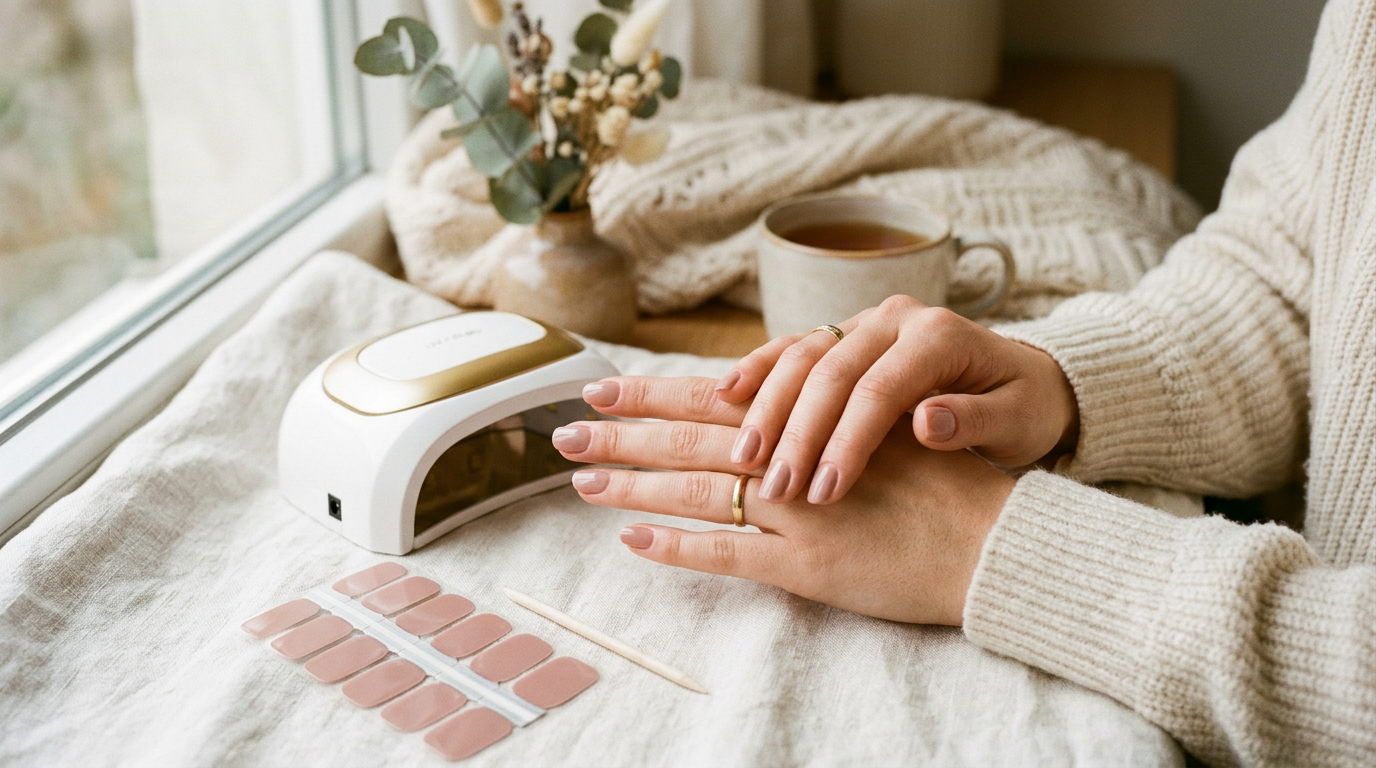
HEMA-free strips are the clear choice for anyone with an existing acrylate allergy, and a smart default for frequent gel users and people with sensitive skin around the nails. If you've ever reacted to gel manicures, acrylic nails, or even dental work with redness, itching, or blistering, an acrylate sensitivity is a real possibility, and HEMA-free reduces your odds of triggering it again.
Frequent gel users benefit too, even without a current allergy. Sensitization is a cumulative process — the more often uncured monomer contacts your skin, the higher your lifetime risk of developing a reaction that's permanent. Choosing HEMA-free lowers exposure to the most common trigger over months and years of regular use. If you do your nails every couple of weeks, that adds up.
People with generally sensitive or eczema-prone skin around the cuticles are also good candidates, because their skin barrier is already easier to penetrate and irritate. For them, removing a known sensitizer is sensible insurance.
Who can comfortably use standard HEMA-containing strips? Occasional users with no history of skin reactions, who apply carefully and cure fully, face a low practical risk. There's no need to panic-replace your supply if you've never had a problem and you're meticulous about technique.
One firm caveat: if you already have a diagnosed acrylate allergy, do not assume HEMA-free means reaction-free. Patch test a new product on a small area first, and talk to a dermatologist before reintroducing any gel product. An allergist can run patch testing to identify exactly which acrylates you react to, which makes shopping the ingredient list far more precise.
How do you apply HEMA-free gel strips safely?
The single most important safety rule is to keep uncured gel off your skin and cure the strip fully — that's true for HEMA-free and HEMA-containing strips alike. Most allergy risk comes from uncured monomer touching skin, so clean application does more for your safety than the ingredient label by itself.
Start by prepping a dry, oil-free nail and positioning the strip so it sits just shy of the cuticle and sidewalls. You want a tiny gap rather than gel flooded onto skin. Press it down firmly, smooth out air bubbles, and trim or file the excess at the free edge. If any gel squeezes onto the surrounding skin, wipe it away before curing.
Then cure for the full recommended time under the LED or UV lamp the strip is designed for. Don't shortcut this. A weak, old, or mismatched lamp can leave the gel under-cured, which means leftover reactive monomer — the exact thing you're trying to avoid. If your strip calls for a specific lamp and curing window, follow it exactly, and cure both the initial set and any finishing layer fully.
After application, wash your hands with soap and water to remove any invisible residue from handling the strips. This small step clears stray monomer off your fingertips before it can sit against skin.
When it's time to remove them, soak and gently lift rather than peeling. Peeling rips off the top layers of your natural nail and leaves it thin and weak, which has nothing to do with HEMA but everything to do with long-term nail health. For removal technique and nail-strengthening routines, see our nail health and safety guides. Brands like ohora and Dashing Diva both sell strips that cure under a lamp, so the same careful routine applies whichever you use.
Key Takeaways
- HEMA-free gel strips omit 2-hydroxyethyl methacrylate, the most commonly reported acrylate nail-allergy trigger.
- HEMA-free is not allergen-free; other acrylates like HPMA or di-HEMA TMHDC may remain.
- The EU has required HEMA products be labeled professional-use-only since 2021.
- Most allergy risk comes from uncured gel on skin, so full curing matters most.
- Verify claims by reading the full INCI list, not front-of-pack marketing words.
Frequently Asked Questions
Are HEMA-free gel nail strips safe for sensitive skin?
They are generally a safer choice for sensitive skin because they remove HEMA, a leading acrylate sensitizer. But HEMA-free does not mean acrylate-free, and other monomers can still irritate reactive skin. Apply carefully, keep gel off the cuticle, cure fully, and patch test a new product if your skin reacts easily.
Can you develop a HEMA allergy from at-home gel strips?
Yes. Repeated skin contact with uncured HEMA monomer can sensitize your immune system, and once that happens the allergy is usually permanent. The main exposure route is gel touching the skin around the nail or incomplete curing from a weak lamp. Clean application and full curing dramatically lower this risk.
Do HEMA-free gel strips last as long as regular ones?
Usually yes. Well-made HEMA-free strips typically last 7 to 14 days with good prep, similar to HEMA-containing strips. HEMA-containing formulas sometimes have a marginally stronger initial grip, but overall formulation quality and your nail prep affect wear time far more than the presence or absence of HEMA alone.
Is ohora HEMA-free?
ohora sells semi-cured gel strips that cure under a UV or LED lamp, but HEMA status varies by product line and can change, so confirm before buying. Check the full INCI ingredient list on current packaging or the official ohora site, or contact the brand directly. Don't rely on general 'sensitive' marketing language to confirm a HEMA-free claim.
Are Dashing Diva gel strips HEMA-free?
Dashing Diva offers gel strips including Gloss and LED-cured Glaze lines, but HEMA content depends on the specific product and may change over time. Verify by reading the full ingredient list on the product you're buying or by contacting Dashing Diva. Always confirm against the official product page rather than assuming based on the range.
What ingredients should I avoid if I'm allergic to acrylates?
Avoid HEMA (2-hydroxyethyl methacrylate), HPMA (hydroxypropyl methacrylate), di-HEMA trimethylhexyl dicarbamate, and other methacrylate or acrylate esters. If you have a diagnosed allergy, ask an allergist for patch testing to identify exactly which acrylates trigger you, then read full INCI lists carefully. Cross-reactivity between different acrylates is common.
Why is HEMA labeled for professional use only in the EU?
Since 2021, EU rules require HEMA and di-HEMA trimethylhexyl dicarbamate products to be labeled 'for professional use only' because of skin sensitization risk identified by the European Chemicals Agency. It is not a ban; regulators decided untrained consumers shouldn't be the primary users of high-HEMA products applied as liquids, where uncured monomer can contact skin.
Do I still need to cure HEMA-free gel strips with a lamp?
Yes. HEMA-free strips are still semi-cured gels, so they require a full cure under a UV or LED lamp to harden properly and lock up any reactive monomer. Skipping or shortening curing leaves uncured gel against your nail and skin, which undermines both wear time and the safety benefit of choosing HEMA-free.